¶ Common Shower Systems
There are a number of types of shower system commonly used in Ireland. As these different systems use different amounts of hot water, BER Assessors will need to be able to identify them in order to account for them correctly in DEAP.
In this section we describe the most common systems, including key features that will help identify the system type in the BER survey.
¶ Vented hot water system
This is the most common system in Irish homes. It is shown schematically in the Figure 5.11.
In this system the HW cylinder is heated by a boiler or heat pump or immersion, or a combination of these systems. It may also be heated by a solar thermal system.
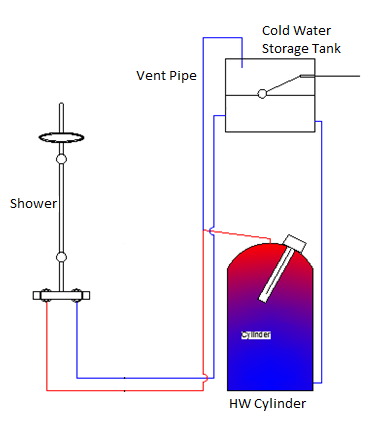
The key feature for identification is the Vent Pipe which rises from the pipework adjacent to the hot water cylinder and terminates over the cold water storage tank.
The key features for identification of the Vented HW system are as follows:
A Vent Pipe: Water is drawn from the cylinder through a horizontal pipe exiting at or near the top of the cylinder. In a vented system this pipe will connect to a vent pipe, which extends vertically upwards (Figure 5.12). The vent pipe is there to allow any excess hot water to drain off safely into the cold water tank and to let any trapped air escape.
The vent pipe terminates over the cold water storage tank (Figure 5.13).
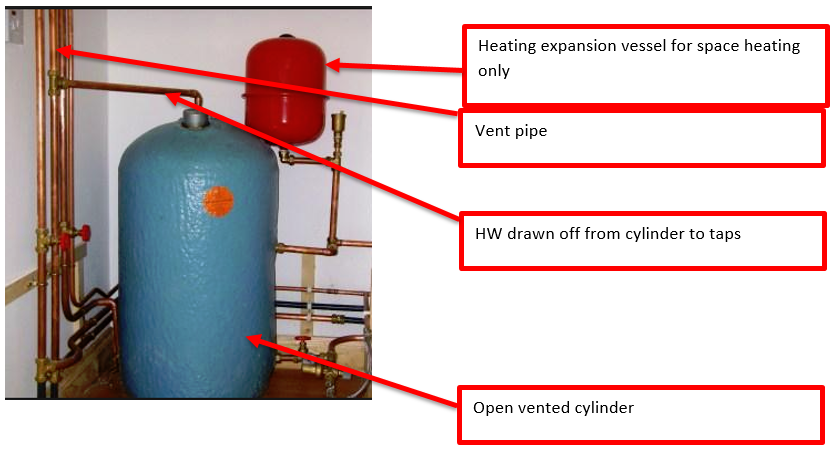
Note:
- the HW Cylinder,
- the horizontal pipe through which hot water is drawn-off from the cylinder,
- the Vent Pipe which rises from the pipework adjacent to the hot water cylinder and terminates over the cold water storage tank.
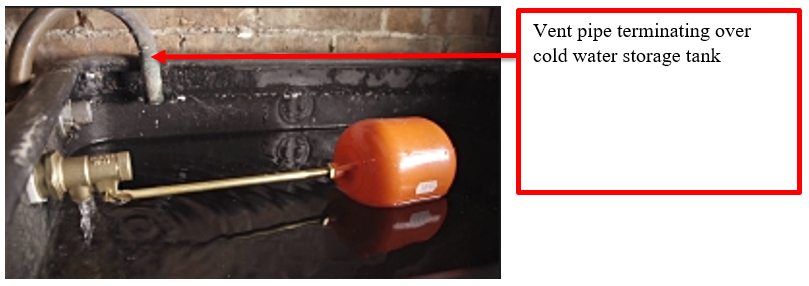
The presence of the vent pipe indicates that this is a vented system.
Hot Water Pump: The vented system can work with or without a pump. Assume the most conservative value, i.e. that there is a pump on the shower, unless you can show otherwise.
¶ Unvented hot water system
The unvented hot water system is less common in Ireland than the vented system but it is seen in newer installations often in combination with newer technologies such as heat pumps. The unvented hot water system is shown schematically in Figure 5.14.
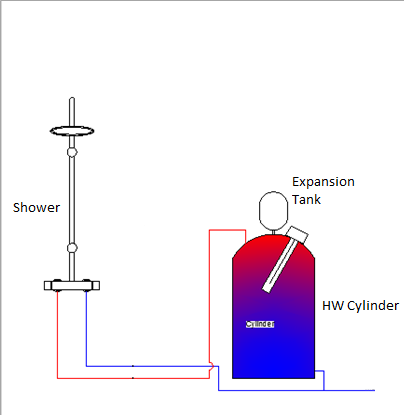
The key features for identification of the unvented HW system are as follows (see Figure 5.16):
- No vent pipe: As it is not a vented system there will not be a vent pipe rising to the cold-water storage tank.
- Expansion Vessels: There should be an expansion vessel present to allow for the expansion of water as it heats. Expansion vessels on the space heating system are usually red whereas expansion vessels on unvented water heating systems would usually be blue or white, as in the picture below. However, it is best to double check which pipework the expansion vessel is connected to.
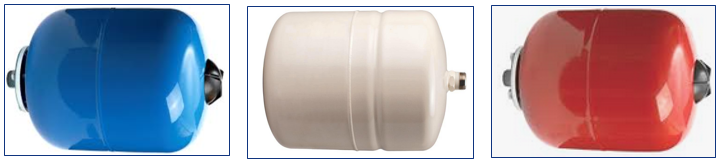
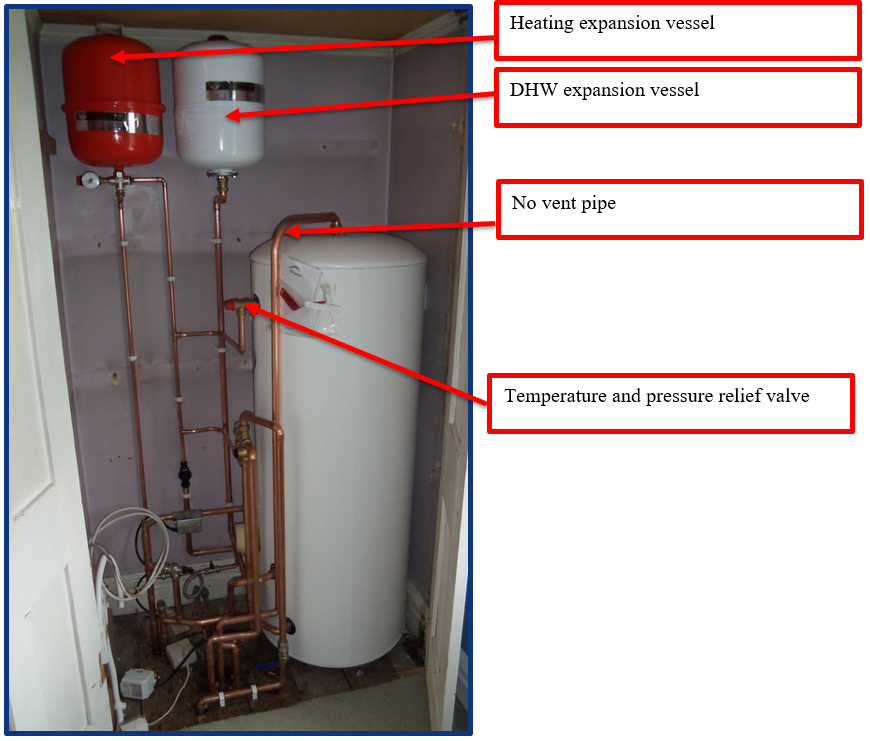
Temperature and Pressure Relief Valve: In order to prevent the water pressure from building to unsafe temperature and pressure levels, the system has a relief valve installed on the cylinder.
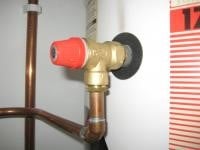
- An unvented system can operate with or without a cold water storage tank, so this is not generally a decisive factor in identifying the system type
¶ Instantaneous electric shower
An electric shower is a device which uses electrical power to heat cold water at the point-of-use, i.e. cold water is heated in the shower unit which is generally located on the shower wall. It does not draw water from a hot water cylinder. The electric shower system is shown schematically in Figure 5.18.
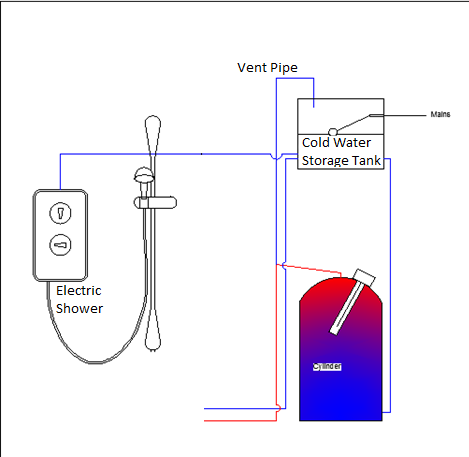
The key features for identification of the Electric Shower system are as follows:
- Wall unit: There will be a unit on the shower wall, with controls to adjust the temperature and flow-rate of the water. See Figure 5.19.
- Single supply pipe: An electric shower has a cold-water supply only, i.e. it does not take hot water from the DHW cylinder (or from any other source). If the pipework is visible, then there should only be one pipe supplying water to the unit.
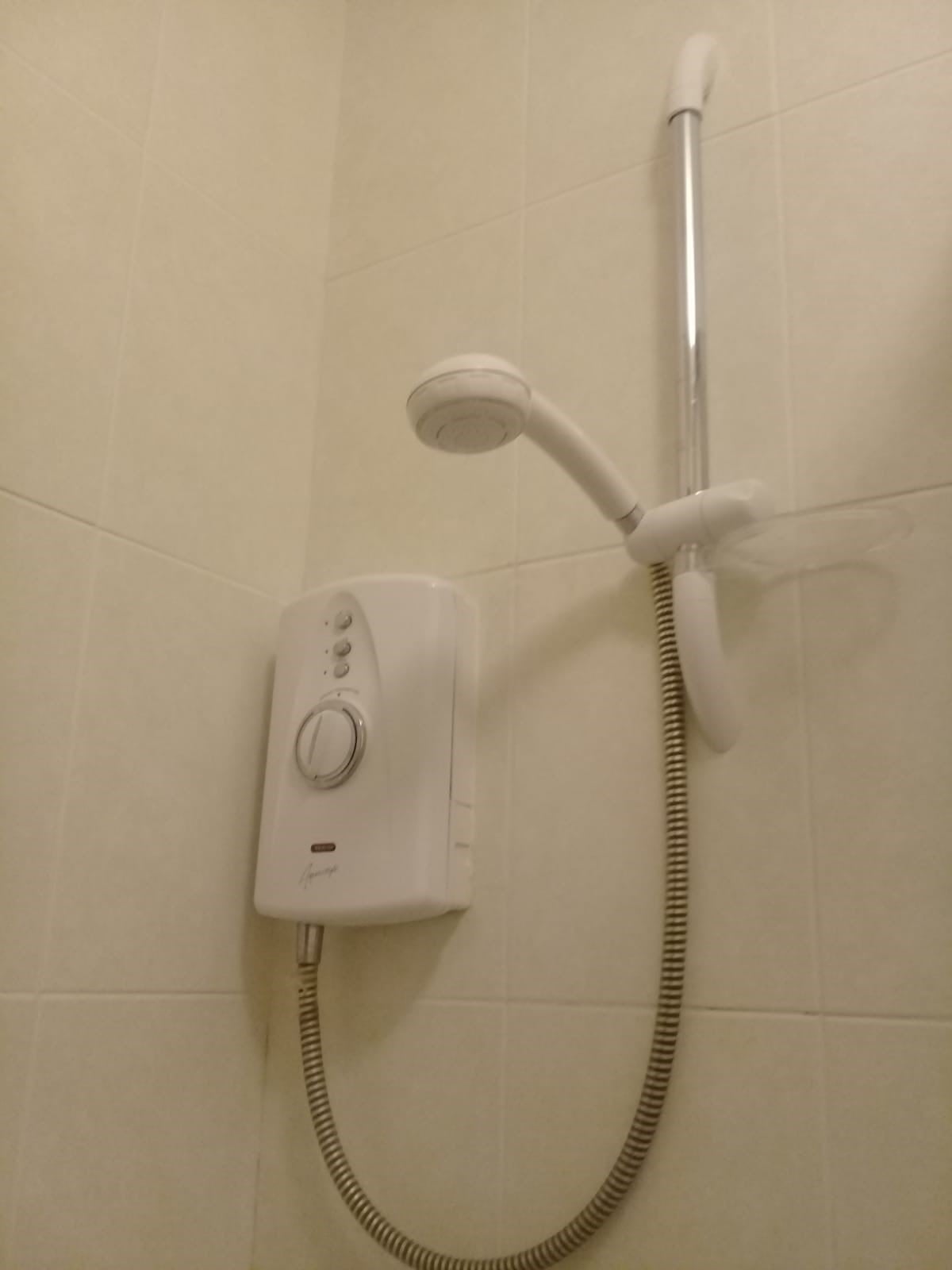
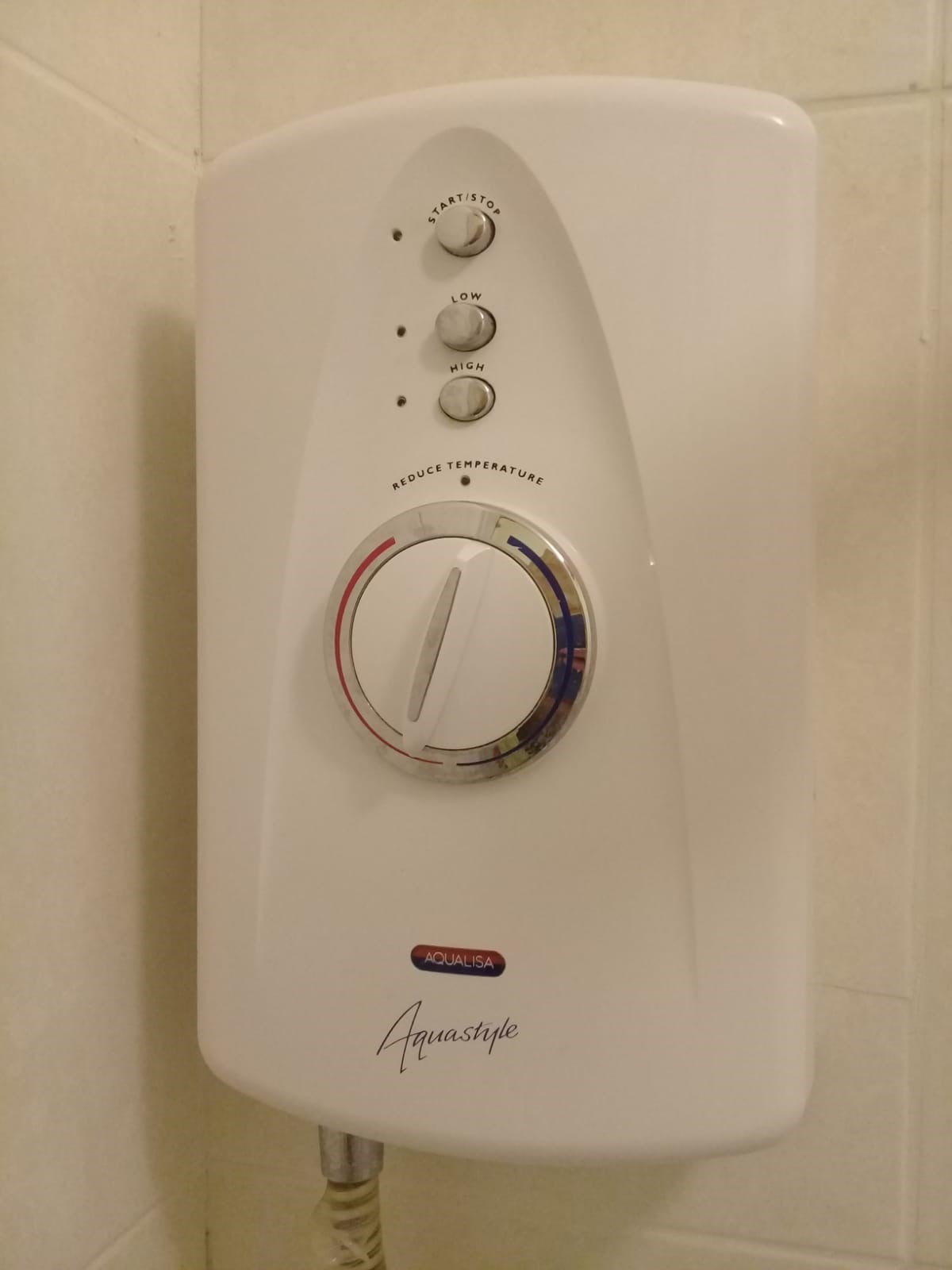
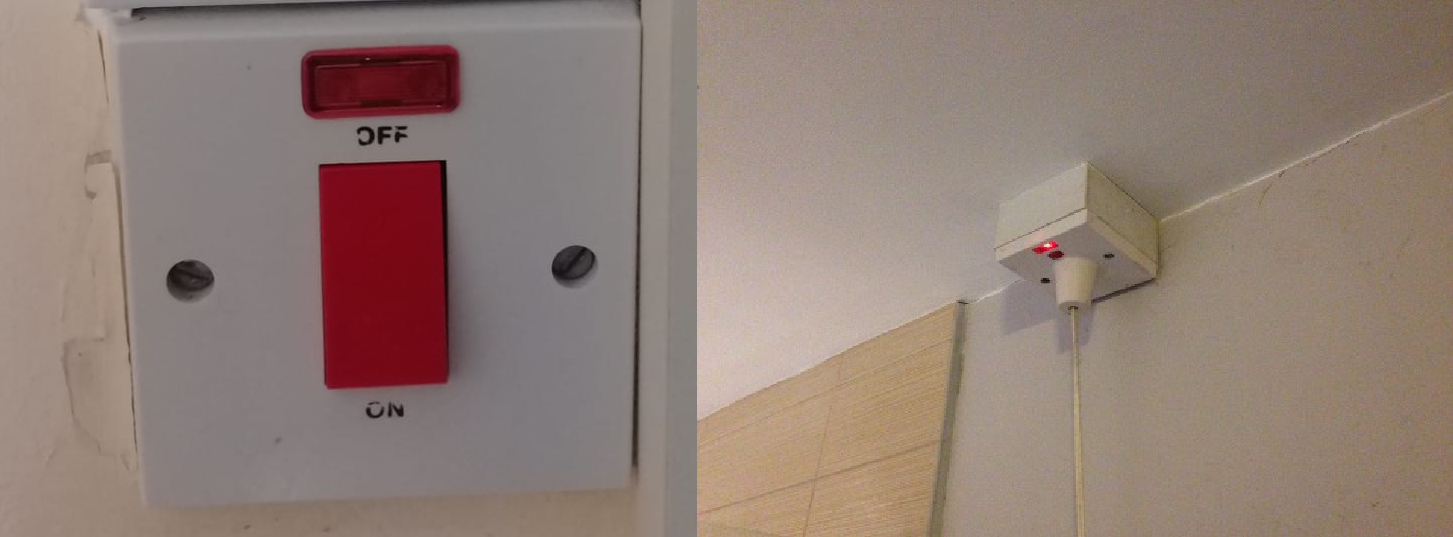
- Isolator Switch: Because of the high power rating of electrical showers there will typically be an isolator unit present. It is often located on the ceiling and switched on using a pull-cord, or it can be located on a wall at the entrance to the bathroom/en-suite as shown in Figure 5.21.
¶ Power Showers
A power shower is a unit that pumps hot and cold water to the shower. It does not heat the water. As such it is a mixer shower; it is not an electric shower.
It should be entered as a Mixer Shower – Vented hot water system + pump.
It can be difficult to distinguish between power showers and electric showers: if the pipework is visible,
- a power shower has 2 supply pipes (hot and cold),
- an electric shower only has one supply pipe (cold).
Otherwise the best approach is to look for a manual for the model installed, which are widely available online.
¶ Shower heated by a Combi boiler or CPSU
A shower that gets it hot water from a Combi boiler or CPSU should be entered as a Mixer Shower supplied by an Unvented Hot Water system.
¶ Shower supplied by a Thermal Store
A shower that receives its hot water from a thermal store rather than a cylinder should be entered as a Mixer Shower supplied by an Unvented Hot Water system.