¶ Mechanical Ventilation
Related content

Balanced whole house mechanical ventilation
This is a fan driven ventilation system providing fresh air to the rooms and extracting exhaust air from the dwelling. The system may or may not be fitted with a heat recovery unit. The DEAP calculation in such cases is based on a minimum dwelling ventilation rate of 0.5 air changes per hour or larger depending on the infiltration rate and the mechanical system.
For dwellings with heat recovery from exhaust to inlet air, the heat loss by mechanical ventilation is reduced based on the heat recovery efficiency. For balanced whole-house centralised systems, the DEAP entries require information on specific fan power (SFP) of mechanical ventilation fans for the calculation of electricity use. Default data is provided in Table 3.7. More information on the heat recovery efficiency and Specific Fan Power (SFP) data is available in Table 3.9.
For continuously running decentralised systems, BER assessors need to calculate an average SFP, and, where applicable, thermal efficiency of the systems installed. The calculations are described here.

Positive input ventilation
This is a fan driven ventilation system providing ventilation to the dwelling typically from the loft space. The DEAP calculation procedure for systems using the loft to pre-heat the ventilation includes 20 m³/h ventilation rate. The energy used by the fan counterbalances the effect of using slightly warmer air from the loft space compared with outside air. Some positive input ventilation systems supply the air directly from the outside and the procedure for these systems is the same as for mechanical extract ventilation.

Mechanical extract ventilation
This refers to a fan driven ventilation system extracting air from the dwelling. The mechanical ventilation system fans do not provide fresh air. The DEAP calculation is based on a throughput of 0.5 air changes per hour through the mechanical system, plus infiltration. Mechanical extract ventilation is available in continuously running centralised systems or in continuously running decentralised systems.
For continuously running and demand controlled centralised systems, the DEAP entries require information on specific fan power (SFP) of mechanical ventilation fans for the calculation of electricity use. Default data are provided in Table 3.7. More information on the Specific Fan Power (SFP) data is available in centralised systems.
For continuously running decentralised systems, BER assessors need to calculate the average SFP of the systems installed. Calculations are described in decentralised systems.

Exhaust air heat pumps
These are fan driven ventilation systems extracting air from the dwelling which use the exhaust air as a heat source for the heat pump, in the scope of Ecodesign Regulations for heat pumps. The mechanical ventilation component does not provide fresh air. The DEAP calculation of the ventilation rate is based on the air changes per hour through the mechanical system. The exhaust air flow rate should be taken from the Ecodesign technical data sheet for the heat pump; it is entered in DEAP in [m3/h]. This air flow rate is used to calculate the effective air change rate, with a minimum throughput of 0.5 ac/h.1
The extract ventilation running time is based on the hours of operation of the heat pump.
The calculation requires information on specific fan power (SFP) of mechanical ventilation fans. Default data is provided in Table 3.7. Alternatively, values based on tests may be used subject to conditions for acceptance of test data for specific fan power. SFP should account for any transformers. The test values used in DEAP are obtained for a list of mechanical extract ventilation on PCDB. The assessor must specify the number of wet rooms where the unit extracts exhaust air.
Where there is insufficient documentary evidence to support a non-default exhaust air flow rate, this is assumed to be equal to extracting the total volume of the dwelling in an hour.
¶ Table 3.7 - Specific fan power for mechanical ventilation systems
| Type of mechanical ventilation system | SFP, W/(litre/sec) |
|---|---|
| Balanced whole house mechanical ventilation, with or without heat recovery |
2.0 |
| Mechanical extract ventilation, or positive input ventilation from outside |
0.8 |
| Exhaust air heat pump (EAHP) |
0.26 |

Mechanical ventilation – non-default data
Non-default values for mechanical ventilation are taken from SAP Appendix Q’s Product Characteristics Database (PCDB) and generally will result in lower calculated energy usage in DEAP than use of defaults. In addition, use of mechanical ventilation in a house with poor (or no) air tightness test results will likely result in an increase in energy usage due to increased air flow and extra electricity drawn by the ventilation fans.
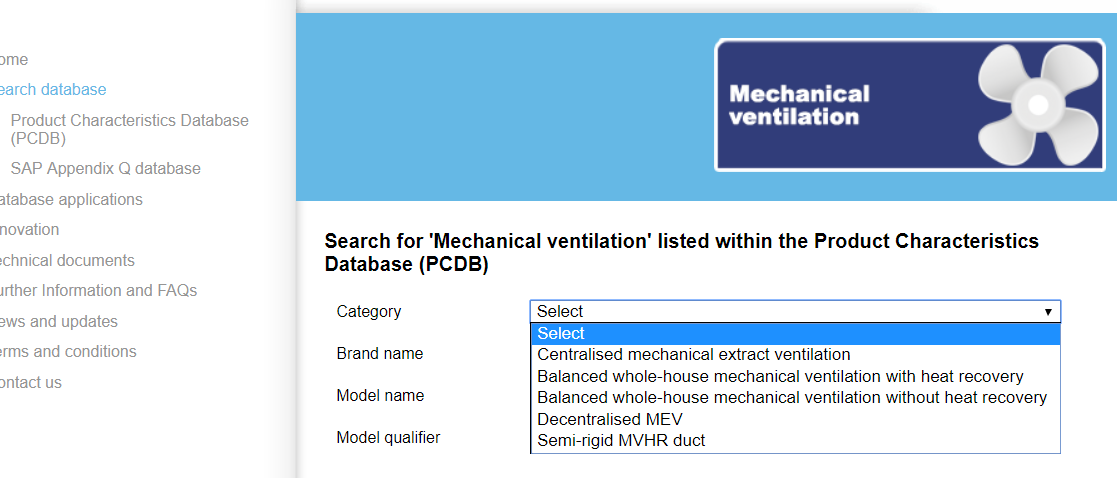
When selecting a ventilation unit from the PCDB, first select the category (as shown in Figure 3.9), followed by brand, model and model qualifier for the unit being assessed.
Figure 3.9 - PCDB Ventilation selection
Then, identify the kitchen, and number of wet rooms with extract vents (n=3 in this case) as per Figure 3.10. Where ducting does not match the tested type, DEAP defaults must be used. Some semi-rigid ducting systems are “equivalent” to rigid ducting on the PCDB. Use data from the year applicable to the date of the supply/install of the MVHR system in the house being assessed. For example, systems up to and including 2011 use the 2009 data in this case. Systems from 2012 onwards use 2012 data. If the date of supply/install is unknown, assume the system is the same age as the dwelling. The “in-use” factors shown on the PCDB do not apply for DEAP.
Figure 3.10 - Sample MVHR unit on PCDB
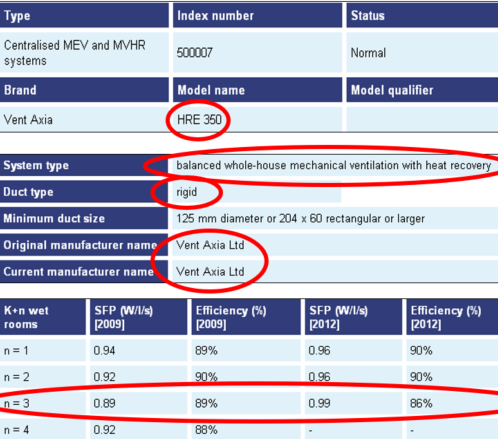
Figure 3.11 - Entering data for the above unit in DEAP if installed in 2012 or later
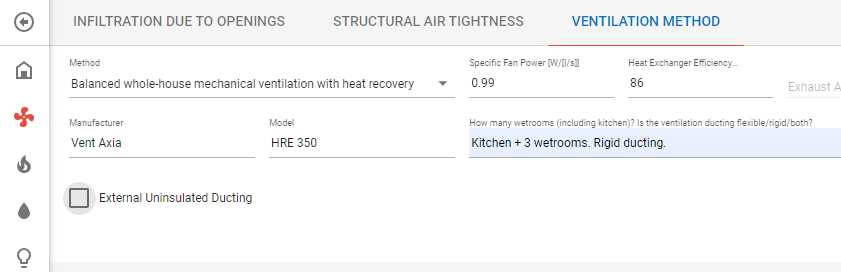

Table 3.8 - Evidence requirements for mechanical ventilation
| Ventilation: Ventilation method | ||
|---|---|---|
|
Guidance on re-use of data for Ventilation - mechanical ventilation can be found here |
||
| Data Entry Item | Guidance | Documentary Evidence |
| Whole house mechanical ventilation |
For Mechanical ventilation systems record make, model, and type of ductwork to support the use of non-default SFP and heat exchanger efficiency. Photographs of the centralised unit in place and the nameplate on the unit provide good support of the make and model (if it is safe to take these photographs). For balanced whole-house mechanical ventilation systems with heat recovery, record whether system ductwork outside the dwelling envelope is insulated and the type and thickness of insulation. This may be recorded onsite or obtained from installer specification documents. For exhaust air heat pumps, the unit air flow rate (m3/h) is also recorded from the Ecodesign Technical Data Sheet. |
|
Table 1 evidence requirements